
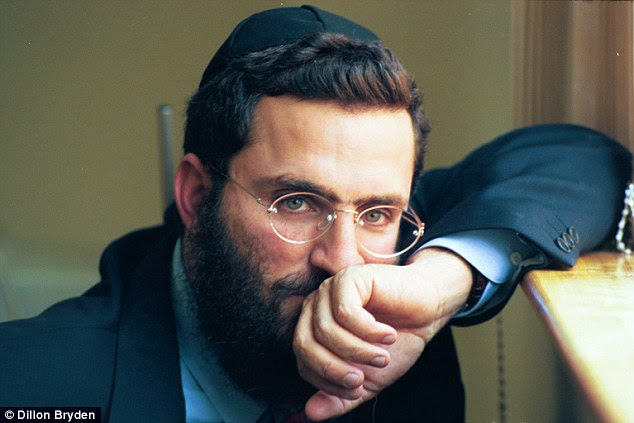
This year I’m in the UK for Thanksgiving with my wife and with Dennis and Susan Prager. Dennis and I are here to debate Israel at the Oxford Union. The debate is this evening, Thanksgiving day.
Thanksgiving is a day for family and togetherness. But in this time of incessant attack on the Jewish state, the fight for Israel cannot wait.
Being across the Atlantic on Thanksgiving makes me feel closer to the US. It was how I felt every Thanksgiving that I spent in the UK while I served as Rabbi at Oxford for 11 years.
There is no country like the United States, the world’s greatest democracy. There is no holiday like Thanksgiving where we show appreciation to God for all that we have. And there is no country that would offer it other than the United States.
Gratitude is the mother of all virtue. It involves the human ability to be touched by someone else’s kindness. Not to feel gratitude is to be cold and almost inhuman. It is to be arrogant and aloof. Few things close the human heart like the inability to show thanks. For if you extend yourself for others significantly and they show nothing you begin to feel taken advantage of. You begin to feel like a fool.
When I was a boy of about ten, from a broken home with a broken heart, Shneur Zalman Fellig inspired me in the ways of Chabad and I became a Rabbi because of him. Due to that choice I was later chosen by the Rebbe to go to Sydney to help found a Rabbinical College and eventually married a woman from there. My family would not have existed without that man.
I have dedicated books to Shneur Zalman and speak of his contribution to my life constantly. I do not do so because I am a good or grateful person but because, in the spirit of Hillel’s dictum, ‘That which you hate never do unto another person,’ I know how painful ingratitude is and never wish to be party to it.
Having served as Rabbi on campus in the UK for 11 years my wife and became responsible for having introduced many young people to their spouses. I nursed them through their early relationships and placed the marriage on a solid footing. I later noticed there is no more assured way of losing a friendship. There was the couple I introduced and counseled for more than a year who did not invite me to their wedding. There was the student who refused to date a woman I suggested but later did so after consistent prodding. I assisted this student through very difficult professional and personal ordeals and introduced him to people who became central to his life professionally and personally. Today I can barely get him to return an email.
What could account for good people behaving so ungratefully? It’s summed up in the famous statement of the Bible regarding the lack of appreciation shown to Joseph by Pharaoh’s chief butler, whom the Bible says “did not remember [Joseph’s kindnesses toward him] and forgot him.” The repetition seems unnecessary until we accept human nature is such that kindnesses of another are naturally inscribed on the heart of the recipient. Gratitude is natural. Therefore, to be ungrateful takes a conscious decision to deny the act of gratitude. People seek to be original and self-made. When someone saves your life or changes it completely, the debt is simply too great. So people shirk a sense of obligation by consciously denying the debt. Thus, the butler did not merely fail to remember Joseph. He consciously chose to forget.
Rabbis and clergy are particularly vulnerable to an absence of gratitude for a number of reasons. First, their contribution to people’s lives is often spiritual and therefore less tangible than someone who, say, gave you your first job or investment in your company. Second, people usually seek them out when their lives are in crisis and forget them once the assistance is rendered. Third, there is an expectation in society that clergy are meant to be righteous, spiritual men who give but expect nothing in return, not even a thank you or simply staying in touch. A Rabbi’s time, unlike an attorney, is not very valued.
There is immense pain of giving and giving and feeling utterly forgotten. Everyone seeks appreciation in life. As a marriage counselor I know that the principal reason that 75% of all divorces today being initiated by women is directly due to women that their nurturance and love goes unappreciated.
Many believe that the story of Chanuka is that of a Jewish military victory. But the victory was short-lived. It would lead to the establishment of a Hasmonean dynasty, the civil war of brothers and Hyrcanus and Aristobulus, and their mutual and ultimately catastrophic appeal to Roman General Pompey the Great, which would eventually lead to the utter destruction of Jerusalem and the Temple. So what are we celebrating? The fact that the Jews won a war and gave gratitude to God. They ascribed their victory to a higher power. They did not need to feel masculine and virile by claiming all the glory for themselves. King David was a great warrior, but the reason G-d loved him was he is remembered today for his harp and his lyre rather than his sword. All his accomplishments he ascribed to G-d. It was his gratitude that gave him the Messianic throne.
Moses visited only seven plagues against the Egyptians. He was barred from punishing the Nile river with blood and frogs, or the dust of Egypt with lice. Why? Because these inanimate objects had saved his life, the river when he was placed as a baby in a basket, and the earth when he hid the body of a brutal Egyptian in it. So far goes the Jewish obligation for gratitude that it is even extended to inanimate objects.
That’s why Thanksgiving is such a special and important day. And we should resolve today that in the coming year we will be much more appreciative and grateful.
America, from its founding, has had a special relationship with God, believing in American promise as manifest destiny. And perhaps it’s the gratitude it has given God every year on Thanksgiving that accounts for the continuation of its blessings. For, if you are someone who never takes blessings for granted, you will sustain and nurture them into the far future.
http://shmuley.com/2014/11/27/the-day-america-gave-thanks/
Rabbi Shmuley Boteach, “America’s Rabbi,” is the international best-selling author of 30 books, winner of The London Times Preacher of the Year Competition, and recipient of the American Jewish Press Association’s Highest Award for Excellence in Commentary. He has just published Kosher Lust: Love is Not the Answer. Follow him on Twitter @RabbiShmuley.